
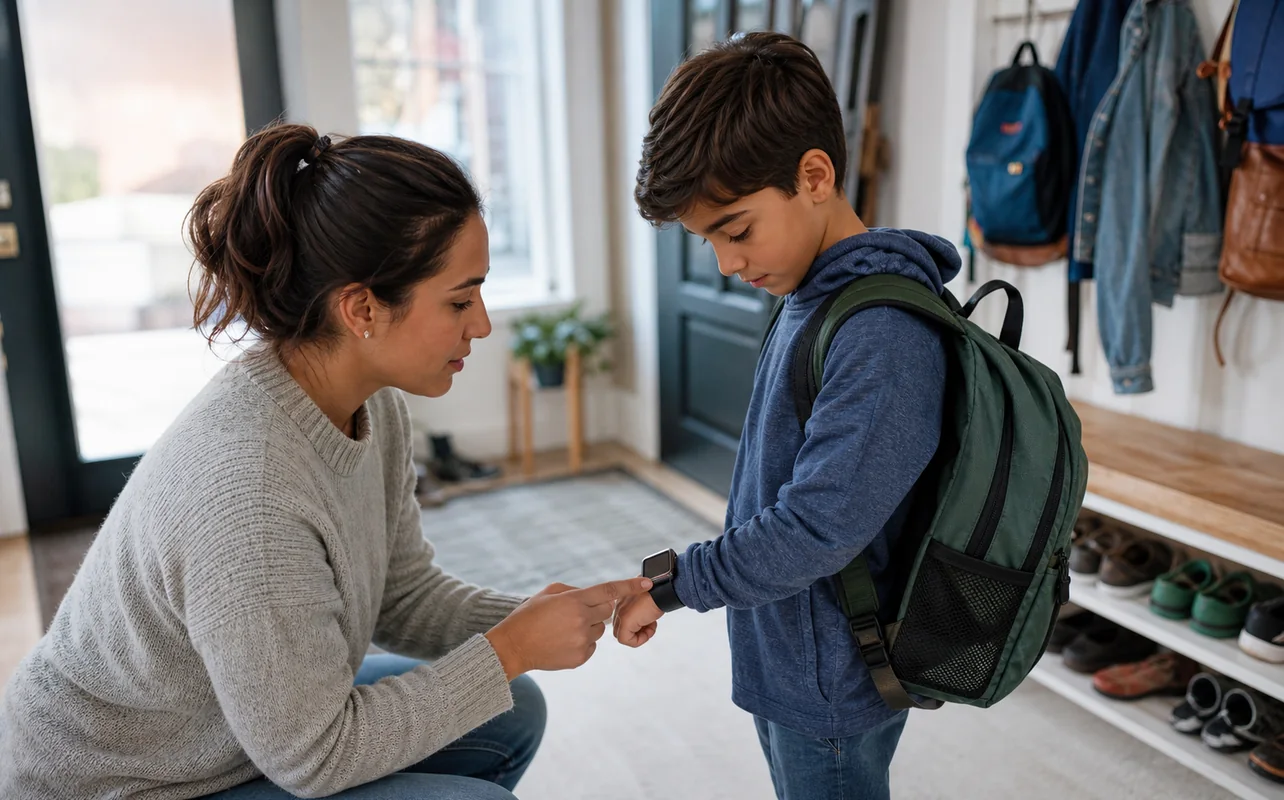
Picture this: a parent and school-age child reviewing a smartwatch schedule before leaving home. That ordinary moment is the useful test. A product succeeds here only when it removes friction without introducing a new maintenance ritual, privacy surprise, or setup problem.
Quick verdict
Clear school modes, dependable location policies, and a simple charging habit matter more than app count. This recommendation is about fit, not a numeric score. Product quality can vary by model, firmware, room, and retailer support, so the final choice should be checked against the exact item you are considering.
Families using watches for basic coordination
Schools that prohibit connected wearables or children not ready for device responsibility
The real-life scenario
In this use case, convenience is only valuable when it survives a normal week: hurried mornings, imperfect Wi-Fi, shared spaces, cleaning, charging, and people who do not want to study a manual. We look for controls that make sense under pressure, maintenance that is easy to remember, and a fallback when the smart feature fails.
The right product should also fit the physical room. Measure clearances, cable paths, door swings, listening distance, storage, and access to power or drainage as relevant. Those details rarely headline a product page, yet they decide whether the purchase feels useful after the first month.
Tradeoffs to accept before buying
- Location data creates privacy obligations
- Notifications can distract
- Small batteries need frequent charging
What to check on the exact product
Confirm this against the exact model, room, and routine before paying.
Confirm this against the exact model, room, and routine before paying.
Confirm this against the exact model, room, and routine before paying.
A low-friction setup plan
- Agree on when the watch stays silent
- Limit contacts and apps
- Charge at the same time daily
Keep the first setup deliberately small. Confirm the core job works, learn the reset procedure, and save receipts, serial numbers, recovery codes, and warranty details. Add optional apps or automations only after the basic workflow is dependable.
Who should buy—and who should wait
Buy for this scenario: Families using watches for basic coordination. The product category is a strong fit when the core job happens often enough to justify the storage, charging, cleaning, subscription, or learning cost.
Wait or choose a simpler alternative: Schools that prohibit connected wearables or children not ready for device responsibility. A lower-tech tool is often the better choice when it is faster, easier to share, and less dependent on an account or app.
Fitbit Ace LTE
A child-focused connected watch to compare for school controls, family contact policies, and charging habits.
Retailer link checked September 8, 2026. It opens an Amazon search for this exact model; price, seller, and availability can change. No Amazon Associates tracking ID is currently attached.FAQ
Does a smartwatch replace a phone?
For limited coordination it may reduce phone dependence, but capabilities vary.
Should location be always on?
Use the least collection that meets the family's actual safety need.
Source and verification note
Primary or authoritative reference checked July 22, 2026: consumer.ftc.gov. Product availability, software features, prices, and terms can change; verify the exact model and current retailer information before purchase.