
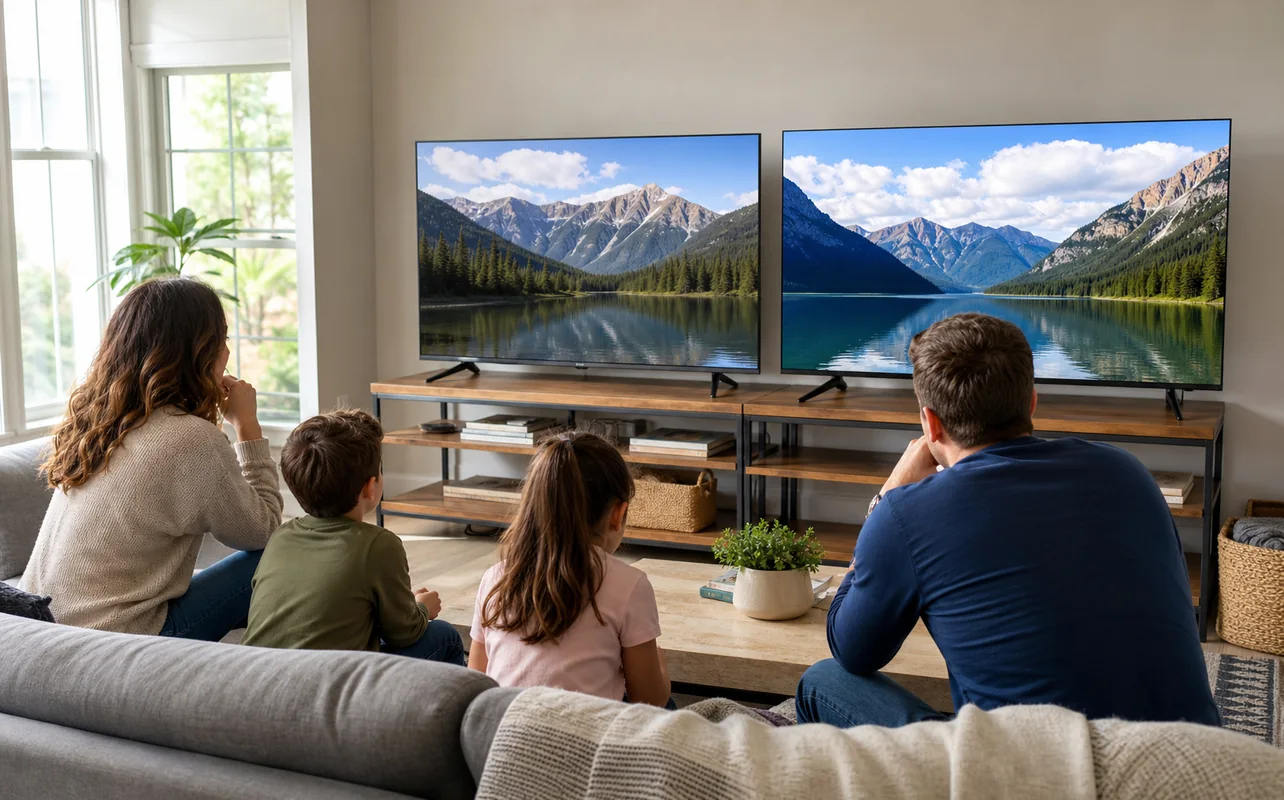
Picture this: a family watching television in a sunlit living room with large windows and everyday furnishings. That ordinary moment is the useful test. A product succeeds here only when it removes friction without introducing a new maintenance ritual, privacy surprise, or setup problem.
Quick verdict
Room light, reflection handling, viewing angle, and evening black-level preference decide more than showroom demos. This recommendation is about fit, not a numeric score. Product quality can vary by model, firmware, room, and retailer support, so the final choice should be checked against the exact item you are considering.
Buyers comparing premium TVs for mixed daytime and evening viewing
Anyone choosing by panel label without checking the exact model
The real-life scenario
In this use case, convenience is only valuable when it survives a normal week: hurried mornings, imperfect Wi-Fi, shared spaces, cleaning, charging, and people who do not want to study a manual. We look for controls that make sense under pressure, maintenance that is easy to remember, and a fallback when the smart feature fails.
The right product should also fit the physical room. Measure clearances, cable paths, door swings, listening distance, storage, and access to power or drainage as relevant. Those details rarely headline a product page, yet they decide whether the purchase feels useful after the first month.
Tradeoffs to accept before buying
- OLED can be less suited to persistent static content
- Mini-LED blooming varies by model
- Peak brightness is not the whole picture
What to check on the exact product
Confirm this against the exact model, room, and routine before paying.
Confirm this against the exact model, room, and routine before paying.
Confirm this against the exact model, room, and routine before paying.
A low-friction setup plan
- Measure viewing distance
- List daytime and evening habits
- Turn off exaggerated store picture modes
Keep the first setup deliberately small. Confirm the core job works, learn the reset procedure, and save receipts, serial numbers, recovery codes, and warranty details. Add optional apps or automations only after the basic workflow is dependable.
Who should buy—and who should wait
Buy for this scenario: Buyers comparing premium TVs for mixed daytime and evening viewing. The product category is a strong fit when the core job happens often enough to justify the storage, charging, cleaning, subscription, or learning cost.
Wait or choose a simpler alternative: Anyone choosing by panel label without checking the exact model. A lower-tech tool is often the better choice when it is faster, easier to share, and less dependent on an account or app.
Samsung QN90F Neo QLED TV
A current mini-LED-class television to compare against OLED when daytime brightness and reflection handling lead the decision.
Retailer link checked September 8, 2026. It opens an Amazon search for this exact model; price, seller, and availability can change. No Amazon Associates tracking ID is currently attached.FAQ
Which is always better?
Neither; the room and content mix determine the better fit.
Does every HDMI port have the same capability?
No. Verify bandwidth and features on the exact inputs.
Source and verification note
Primary or authoritative reference checked July 22, 2026: hdmi.org. Product availability, software features, prices, and terms can change; verify the exact model and current retailer information before purchase.